


Australia
The Portuguese were the first Europeans to reach Australian shores, either 1522 or 1601 Exploring recently the works of historian Rainer Daehnhardt, of German extraction for an eventual chapter on

O Português, Portuguez, der Portugalöser, Portugaleser, or Golden Portuguese coin
O Português, Portuguez, der Portugalöser, Portugaleser, or Golden Portuguese coin In a recent visit to the Money Museum in Lisbon (Museu do Dinheiro) the tour guide called our attention to

A cup of tea… or cha?
A cup of tea… or cha? Ch’a, Chá, Chai, Té, Tè, Te, Tea, Tee, Thé, Thee… are only some of the versions of this drink’s name. Apparently they fall in

The Legacy of Asia
The Legacy of Asia “For crop transferences between Asia and Africa and America, the Portuguese are again presumed to have been largely responsible. To them, for want of other

Slavery, Slave Trade, Racial and Religious Discrimination
Slavery, Slave Trade, Racial and Religious Discrimination By 2015-21 with the socialist party led government, Portugal has a black female justice minister (Francisca van Dunem), a mixed race – Portuguese/Indian(Goa)

Saudade and Saudosismo
Saudade and Saudosismo Saudade has been promoted by some to a philosophical attitude/state of mind they say was impersonated by the Portuguese people in its shape of saudosismo. Hope you

Portuguese, the language
Portuguese language Around a week ago I came across the news that we were celebrating the World Portuguese Language Day (May 5th) (or Dia da Lusofonia), so I decided to

Carlos Paredes (16/02/1925 Coimbra – 23/07/2004 Lisboa)
Carlos Paredes Carlos Paredes was a virtuoso Coimbra style of the Portuguese guitar player and composer. Known as the ‘Man of Thousand Fingers’ he is regarded as one of the

Vasco da Gama (1466-1524)
Vasco da Gama Figure 1- Statue of Vasco da Gama on the island of Mozambique, on whose vicinity he spent a few weeks on the way to India Now that

Camoes on his 500th birthday
Camões Luís Vaz de Camões, sometimes anglicized as Camoens or Camoëns, is considered Portugal‘s and the Portuguese language’s greatest poet. His mastery of verse has been compared to that of

Os Magriços, the skinny “Twelve of England”
Os Magriços, the skinny “Twelve of England” and Eusébio The Magriços was the nickname given to the Portugal national football team which finished third at the 1966 FIFA World Cup

The Ukulele, or should we say Braguinha, or Cavaquinho, or…?
The Ukulele, or should we say Braguinha, or Cavaquinho, or…? Some Sri Lanka ensembles played ukuleles, an instrument adopted in Hawaii from the Portuguese cavaquinho, braguinha or machete chordophones brought

Portuguese Man O’ War, or Portuguese Caravel
Portuguese Man O’ War, or Portuguese Caravel Figure 1 – Portuguese man o’ war The Portuguese Man O’ War, also known as The Bluebottle in Australia, and named ‘Caravela Portuguesa

The causes of Portugal’s backwardness
The causes of Portugal’s backwardness Inspired/triggered by a recent book of Nuno Palma of the same title (“Causas do Atraso Português. Repensar o passado para reinventar o presente”, D. Quixote,

The Inheritance of the Americas
The Inheritance of the Americas “As Columbus and his successors became familiar with the agriculture of America, they found that the only crops common to both the Old and New

Portugal’s and/or Portuguese origins
Portugal’s and/or Portuguese origins Basically, one can identify two main schools of thought about this, namely one betting on historic chance, defended by Oliveira Martins and Alexandre Herculano, and another

Preface
Preface Preliminary thoughts “Patriotism is the last refuge of a scoundrel.” Samuel Johnson, April 7, 1775 “…[T]he Portuguese expansion of the 15th century constitutes an entirely new event in the
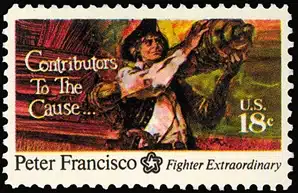
Peter Francisco
Peter Francisco Peter Francisco (Pedro Francisco Machado), (Porto Judeu, Terceira Island, July 9, 1760 – Richmond, March 15, 1831, is another personality worth mentioning in this context. He is by


The Vikings on Portuguese shores
The Vikings on Portuguese shores As mostly everywhere else where they delved, perhaps with the exception of Iceland where they settled from around the middle of the second half of

The Melungeons in North America
The Melungeons in North America The Melungeons[1] have been described by “many writers” as “a clannish race of people that inhabit the Cumberlands[2] and whose origin lies shrouded in the

FDI Subsidies
Why shouldn’t anyone be paying a cent to attract foreign direct investment to Portugal? To anywhere else for that matter too? Even if Portugal has a long tradition of subsidising

The Inheritance/legacy of the Moors/Arabs/Muslims
The Inheritance/legacy of the Moors/Arabs/Muslims The Muslims/Moors were on the Iberian Peninsula from 710 (Ossónoba/Algarve was taken by Mûsa Ibn Nusayr in 713) to 1492 (coincidentally the year of the

Thomas Jefferson, the Abbot Correa da Serra and Portuguese Wines
Thomas Jefferson, the Abbot Correa da Serra and Portuguese Wines On the grounds of Monticello While visiting Monticello a couple of years ago, above shown grave stone on Mulberry Row

Ethiopia. The Land of Prester John
Ethiopia. The Land of Prester John A somewhat similar case to the one of Japan happened in Ethiopia, where the first Portuguese, Pêro da Covilhã, arrived 1492, 1493 or early

Le Portugieser
“Le Portugieser” “We really don’t know how long an IWC lasts. We’ve only been around for 139 years. Portuguese Chrono-Automatic. Ref.3714: An IWC is made to be passed on. Le

Japan. The Namban Screens and Wenceslau de Moraes
Japan. The Namban Screens and Wenceslau de Moraes These painted folding screens – “biombo” in Portuguese, derived from the similarly sounding Japanese word “biô-bu” [byōbu (南蛮屏風)] – portray the arrival/presence

The Portuguese Columbus
The Portuguese Columbus The (hypo)thesis of a Portuguese nationality of Columbus should not surprise us as many other national/regional origins have been claimed for him by many different authors of

The Euro / Debt Problem
The Euro / Debt Problem Rodrigues (2012) and Azevedo (1988) count till now several episodes of default or debt renegotiation by the Portuguese state along its existence in following years:

Luso-American Links
Luso-American Links Interactions between the two countries go way back to the early beginnings of what was to become the United States of America. Some of the readers who might

Portuguese Decolonization
Portuguese Decolonization Decolonizition took 13-14 years of war in the continental African colonies of Guinea-Bissau, Angola and Mozambique. Civilian African casualties were estimated at around 100 thousand deaths, some of

Chronology
Chronology 1128. At the battle of São Mamede (near Guimarães in the North of today’s Portugal), Afonso Henriques, Count of Portugal[1], son of count Henry of Burgundy of the

Portugal and the Jews
Portugal and the Jews Moisés Espírito Santo[1] goes as far as to defend the thesis according to which pre-Roman language, religion, toponymy, and other civilizational traits of Iberian people would

Monsanto (Holy Mountain) and its Portuguese origins, at least in name
Monsanto (Holy Mountain) and its Portuguese origins, at least in name When I recently googled ‘Monsanto’ I got about 6,910,000 results in 0.27 seconds and the first ones refered to